

What is Medome?

"Medome" 目止め process
I personally rarely do this as I like Kannyu and other surface changes on pottery I witness over time. (also I'm quite lazy..!) The porous surface of ceramics will absorb oil and food easily. This may result harsh stain and odor. When we love the way the piece looks at first sight and want the look to last long, there are little tricks we can do easily. It's called Medome in Japanese.
I just cooked some ceramic bowls in a large pot for 30 min. This does not just prevent liquid get absorbed in cracks, but also makes the structure of the ceramics a little tighter.
After this initial step, we just want to soak the piece in water for a few minutes before each use. Although these little stains will add a unique character to it, and the vintage feel is certainly something to enjoy.
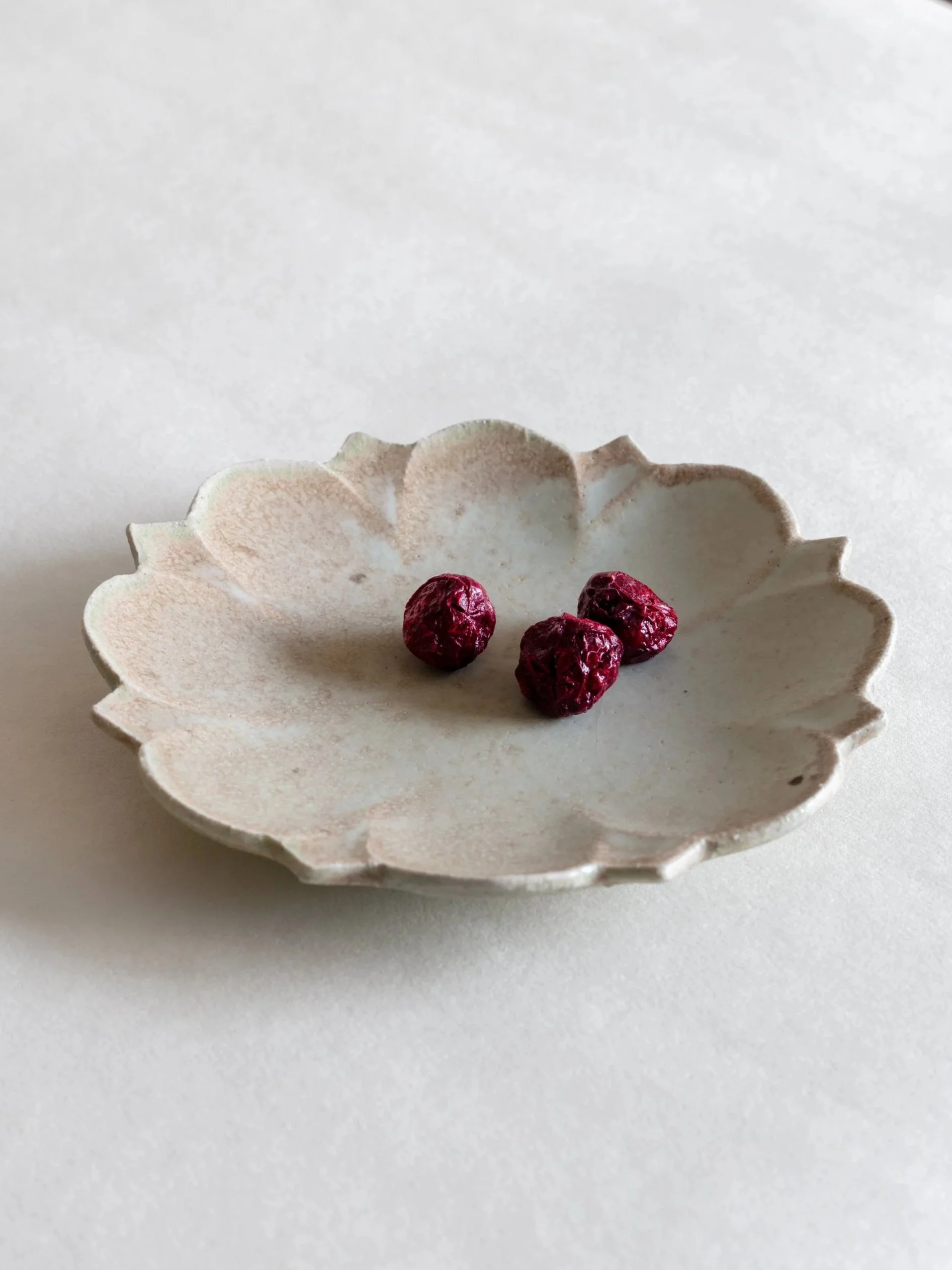
The Rinka Flower Plate by Kodo Kiyooka is a beautifully crafted ceramic piece that embodies the delicate balance of nature and art. The name "Rinka" (輪花) translates to "flower ring" in Japanese, referring to the plate’s design, which subtly evokes the organic shape of a blooming flower, with layers of graceful, petal-like curves. The intricate design, paired with Kiyooka’s expert craftsmanship, makes this plate a striking addition to any collection.
Handmade with precision, the Rinka Flower Plate features soft, flowing lines and a smooth, matte glaze that enhances the natural beauty of the clay. Each plate is unique, with slight variations in texture and color that showcase the artisan’s skill and attention to detail. Perfect for showcasing your favorite dishes or as a decorative accent, the Rinka Flower Plate brings a serene and timeless elegance to your table.
152.4mm D x 25.4mm (6" D x 1" H)
KK16
These are all made by hand, so each one may differ from the photo and listed measurements.


The Hakeme Rice Bowl by Atsushi Ogata is a handcrafted Japanese ceramic featuring dynamic brushstrokes in the hakeme technique. With its bold, expressive design and rugged texture, this rice bowl blends traditional Japanese artistry with a modern edge. A perfect addition for collectors or anyone who appreciates unique, functional handcrafted ceramics.
Approx. 130mm D x 60mm H (5"D x 2.4"H)
AO21
Visit Product care page
*These are all made by hand, so each one may differ from the photo and listed measurements.