

The Rhythm of Living Indigo
Hon-ai: The Art of Living Indigo and Slow Weaving
There is a meditative rhythm to working with materials that are genuinely alive. In a world where shortcuts are the norm, stepping into a process that completely rejects synthetic chemical boosters changes how we appreciate color. This philosophy underpins the latest collection of pure linen placemats at Japan Suite, created by textile artist Anri Izai in collaboration with master dyer Ayaki Shinada at NORABI studio in Chiba, Japan.
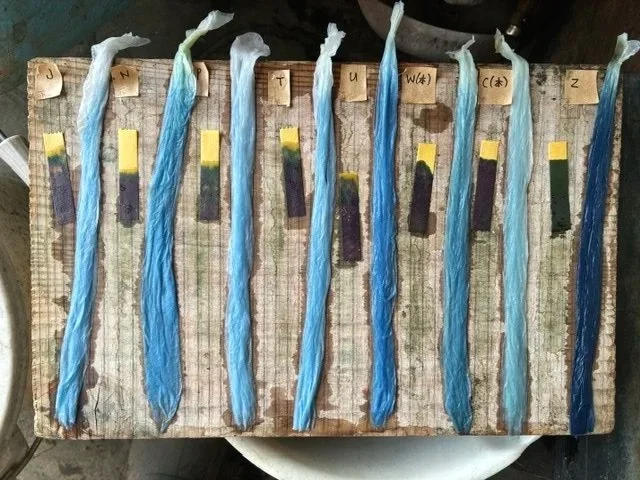
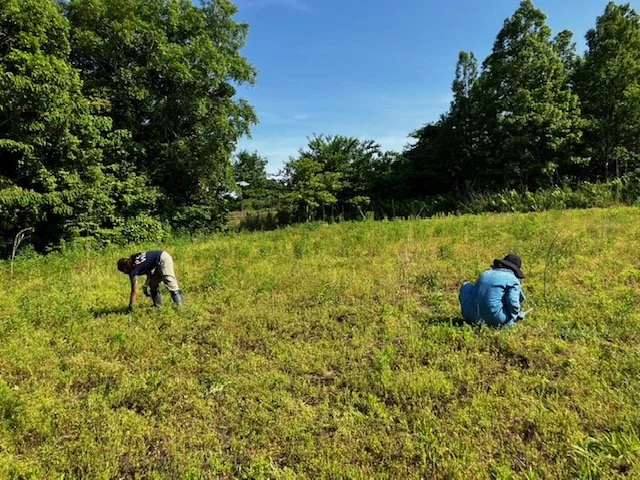
The deep, resonant blue of these pieces comes from Hon-ai (natural indigo), cultivated through a traditional fermentation process dating back to Japan's Edo period (1603–1868). The indigo vats at NORABI are entirely chemical-free. Instead, the studio coaxes color out of just four natural ingredients:
Sukumo: Composted indigo leaves
Ash lye: Prepared from wood ash
Shell ash: Derived from clamshells
Bran: Wheat bran to feed the culture
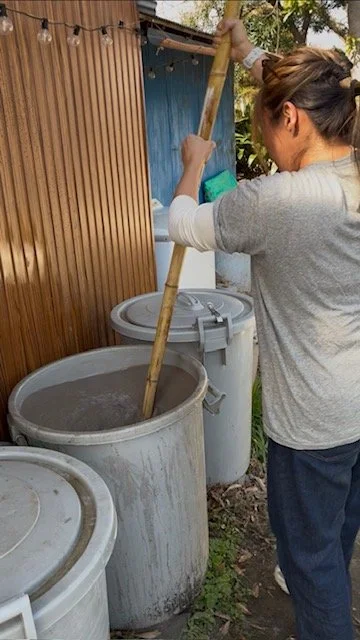
Because these vats house active, living organisms, they require constant, daily care. If they are overused, the liquid loses its vitality, meaning the studio can only dye in small, deliberate batches. This organic balance ensures that colors emerge with soft, natural variations unique to each dyeing cycle.
The journey of the textile begins well before it ever encounters the dye. Using the kasuri (resist-dyeing) technique, Izai knots the Japanese linen threads by hand at precise intervals. These knots shield sections of the fiber, laying the groundwork for a softly blurred pattern unique to each set.
At the studio, the intensive dye process spans four to five days. Izai submerges the knotted bundles into the living vats at least four times to ensure rich color fastness. Between dips, the fibers are brought out into the open air to oxidize and dry under the sun for a minimum of two days, allowing the blue to layer onto the linen fibers like a slow painting. Once the sequence of dyeing, washing, and sun-drying is complete, the threads are carefully untied.
Back in her studio, the work transitions to the floor loom. Izai sets the dressed threads and begins the rhythmic mechanics of hand-weaving, throwing and beating the shuttle before trimming, washing, and hand-shaping each individual piece.
Woven from 100% pure linen, these placemats carry a natural, relaxed structure that softens beautifully with age but creases easily. When they arrive, they bring with them the texture of an honest, resilient textile—one that carries the memory of the sun, the fields where the leaves grew, and the careful hands that guided it to the table.
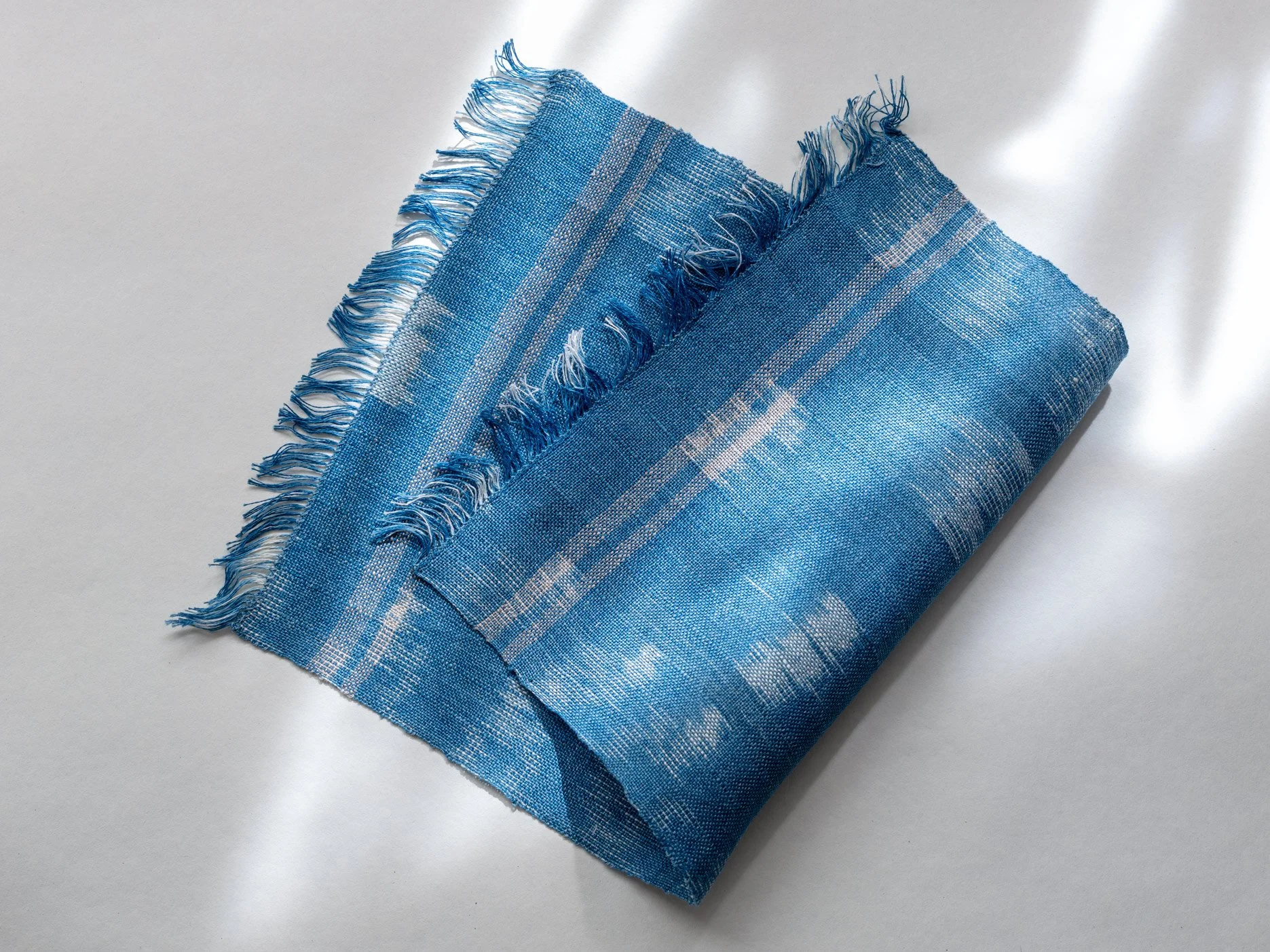
Hand-dyed and hand-woven placemat by Anri Izai ©Japan Suite inc.