

 Image 1 of 6
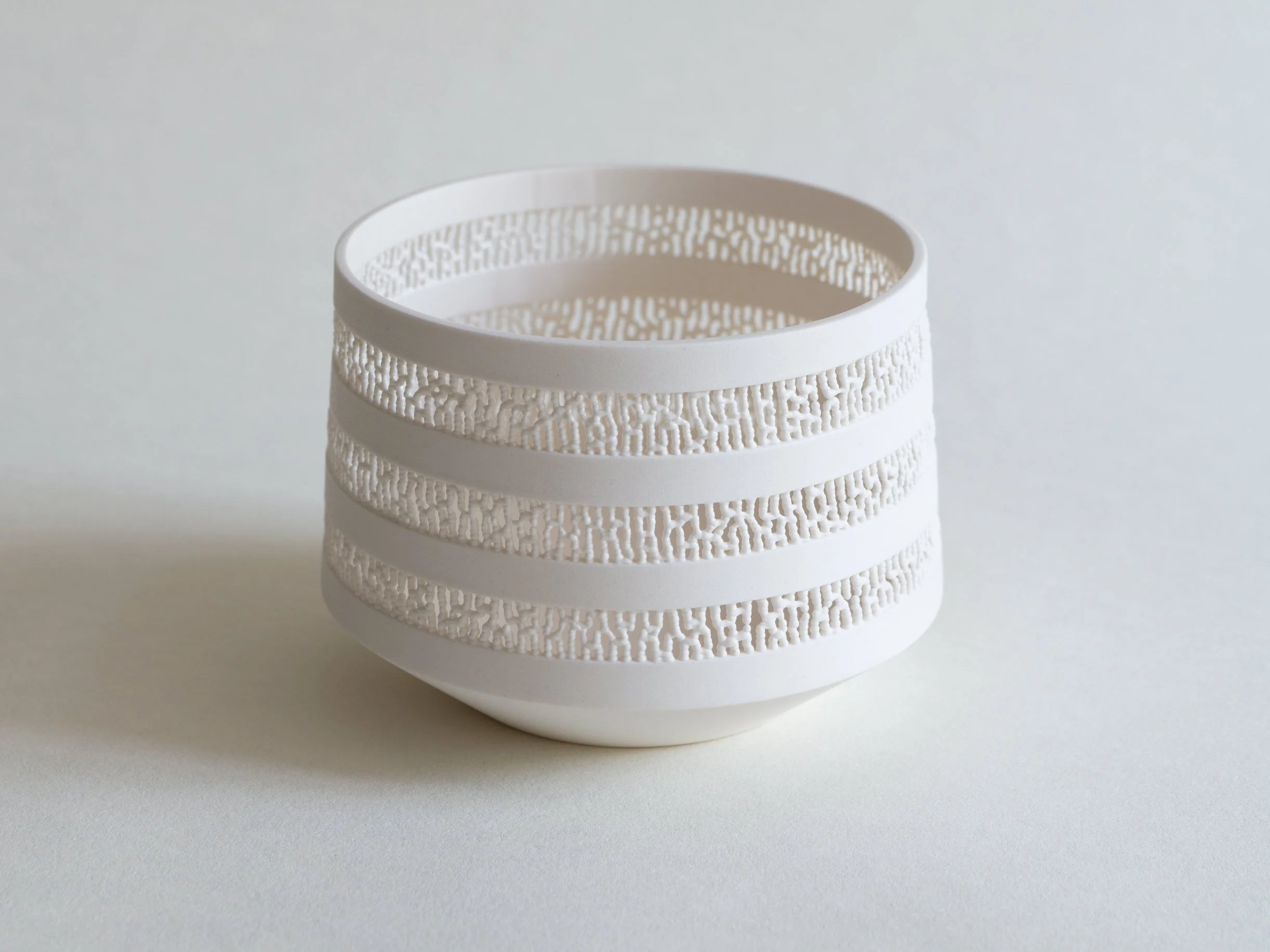 Image 2 of 6
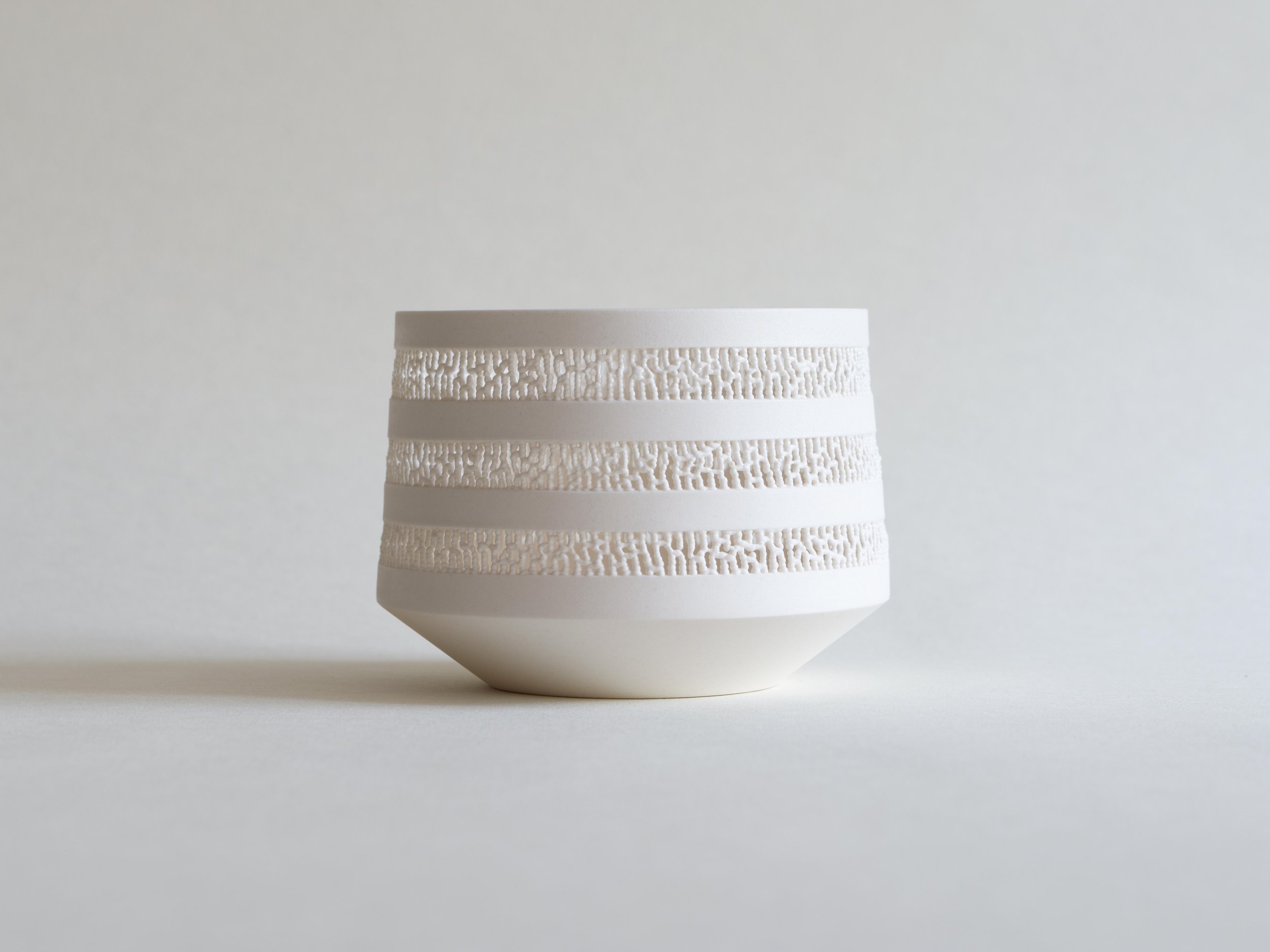 Image 3 of 6
 Image 4 of 6
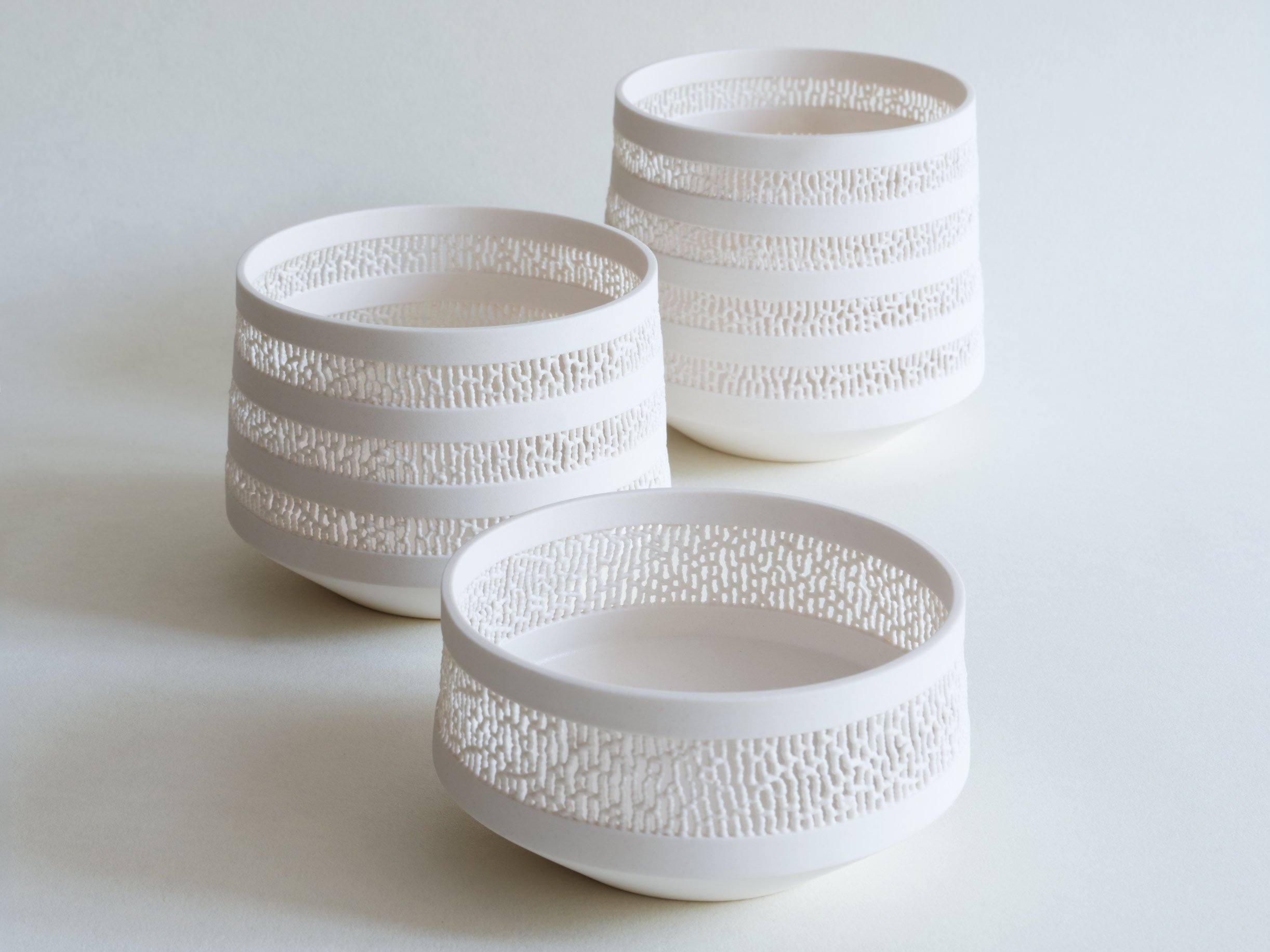 Image 5 of 6
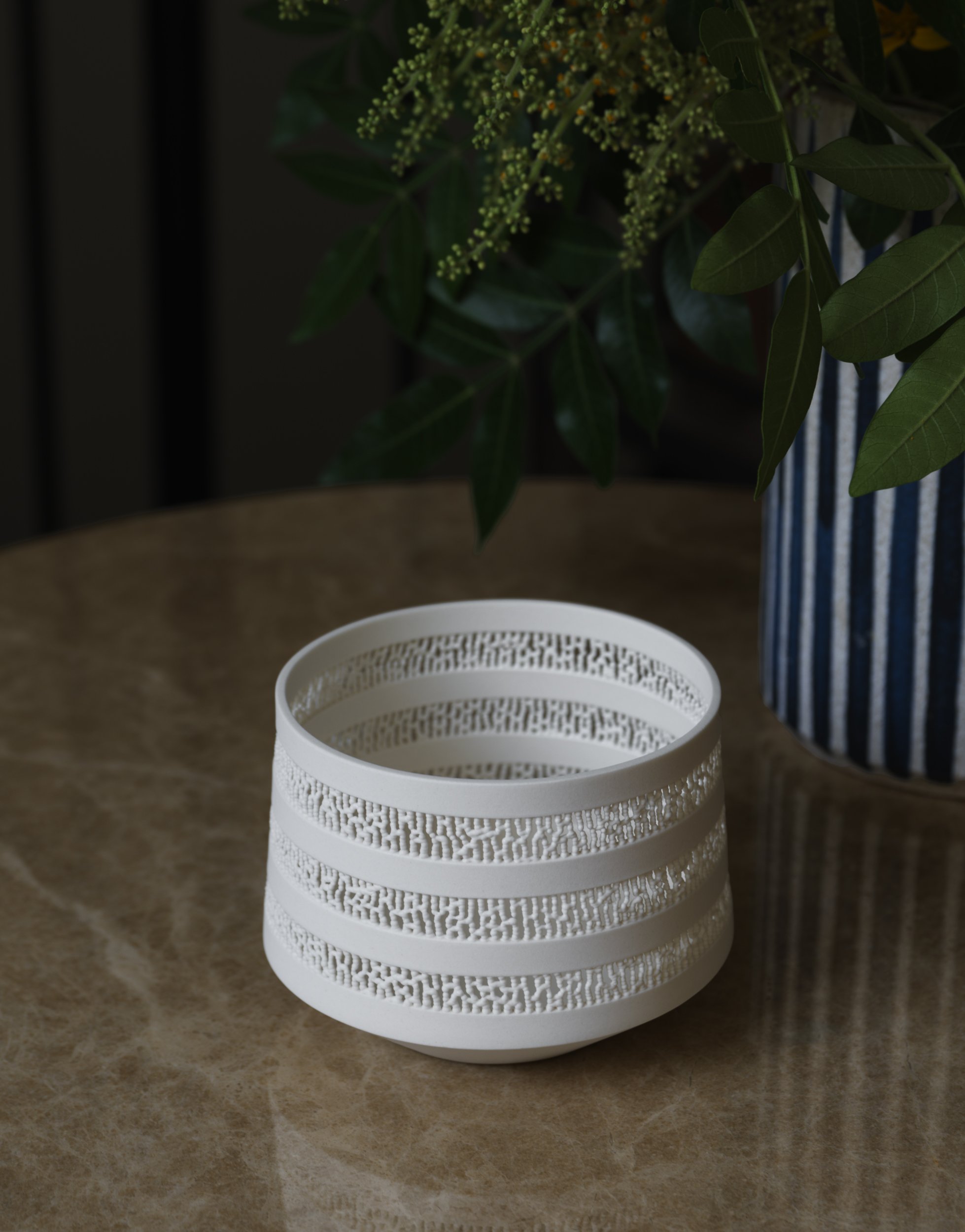 Image 6 of 6
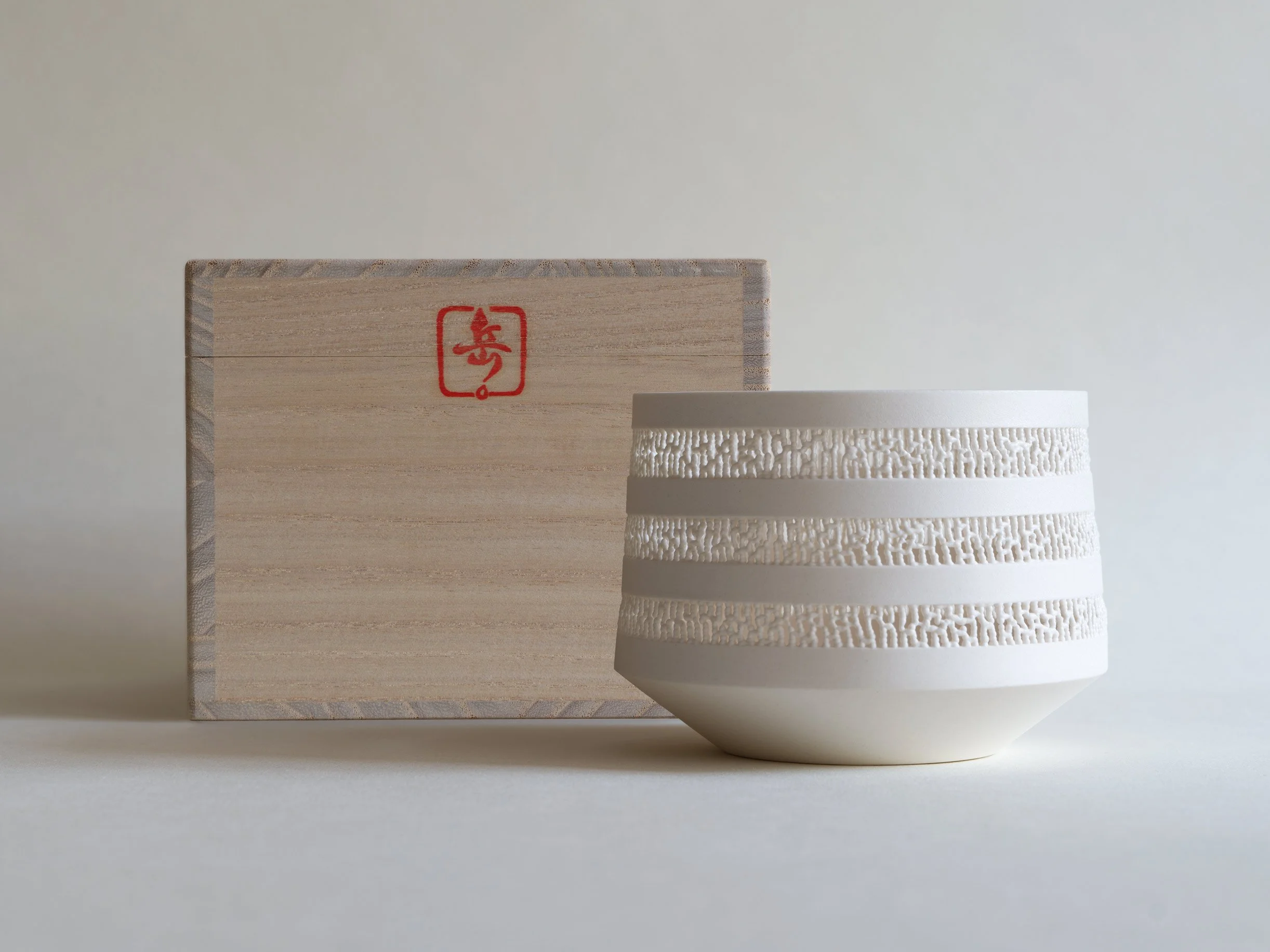
Handcrafted Porcelain Vessel 02 by Takefumi Aoki from Japan

Takefumi Aoki 青木岳文
Takefumi Aoki was born in Gifu Prefecture in 1991 and trained in ceramics at Aichi Prefectural University of Fine Arts, studying under the ceramicist Hideki Kawamura before continuing his training at the Tajimi City Pottery Design & Technical Center. But his own reference points were never only ceramic ones. Alongside his teacher's spare, disciplined forms, Aoki has pointed to product designers — Masahiro Mori, Makoto Komatsu, Philippe Starck — as early and lasting influences: makers for whom form, material, and an unexpected sense of proportion are inseparable from function. That instinct is visible in his work today. His pieces read less like traditional tableware and more like small architectural objects — vessel-shaped, but built with the logic of structure, surface, and void.
Aoki's process starts, like much cast porcelain, with a plaster mould: he casts a vessel form in liquid porcelain slip, producing clean, geometric planes with the crispness only casting can give. Then comes the part of his practice that has no real precedent. He cuts the cast form apart along the seams where its bands will sit — and instead of rejoining them smoothly, he rebuilds each seam by hand, piping the same porcelain slip through a fine, dropper-like tool called itchin, bead by microscopic bead, until the join itself becomes an open, breathing lattice.
Itchin is normally a decorative technique, used for trailing patterns across an already-finished surface. Aoki uses it structurally — as the actual joint holding the piece together — which is not something seen elsewhere in contemporary ceramics. Each band in his work is not an applied pattern; it is the literal seam of the vessel, built one hand-placed grain at a time, often amounting to many thousands of individual beads per piece.
The risk compounds at the kiln. Fired to roughly 1230°C, porcelain shrinks significantly as it matures, and every one of those thousands of hand-placed joins has to survive that shrinkage without a single failure. A meaningful proportion of pieces are lost at this stage — cracked, collapsed, or simply not making the artist's standard. What survives is a vessel where two entirely different qualities of surface sit side by side: the flat, cool, geometric plane of the mould, and the warm, granular, almost woven plane built by hand. Light behaves differently across each — passing straight through the lattice, catching and shadowing along its texture — producing the crisp, quietly rigorous whiteness that defines his work.
It's worth saying plainly: this is not decoration applied to a vessel. It is the vessel, built by hand at the scale of a single grain.
Profile
Takefumi Aoki (b. 1991, Gifu Prefecture)
2015 — Graduated, Aichi Prefectural University of Fine Arts
2017 — Completed, Tajimi City Pottery Design & Technical Center
Selected awards
2017 — Selected, Kikuchi Biennale (7th; also selected 8th, 9th editions)
2018 — Excellence Prize, Takaoka Craft Competition
2019 — Toki Oribe Encouragement Prize, 12th Contemporary Tea Ceramics Exhibition
2021 — Sakazaki Shigeo Ceramics Prize, 12th Mino International Ceramics Exhibition
2023 — Jury Prize, Blanc de Chine International Ceramic Art Award
Selected exhibitions
2023 — Two-person exhibition, Hana Asagi
2023 — "The White Road," Touch Ceramics
2023 — Three-person exhibition, Mito Chukyo Boeki
2023 — Solo exhibition, Nihombashi Mitsukoshi
2023 — Group exhibition, Gallery Sukiya
2024 — "Musuhi," Maud and Mabel
2025 — Solo exhibition "Floating Vessels," megumu art
2025 — Featured artist, artist talk on the succession of Japanese art and craft, Tokyo Art Antiques (Nihombashi–Kyobashi)