

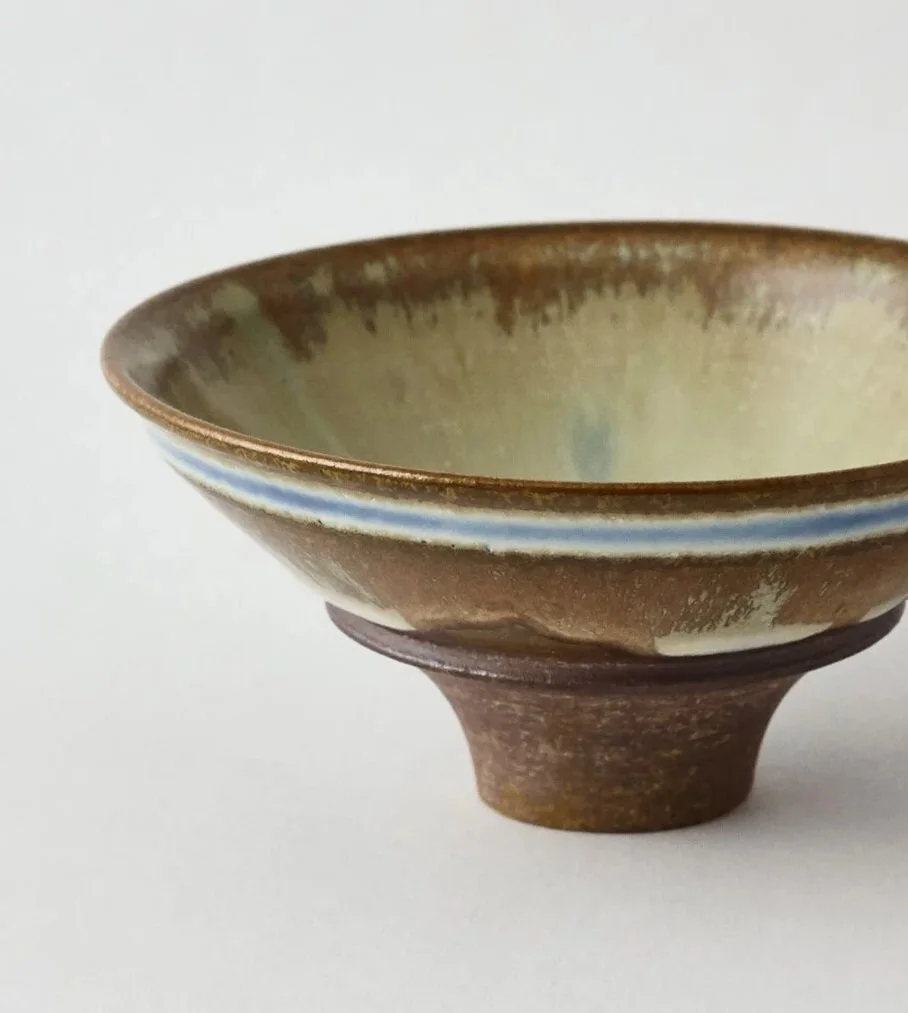
Ochoko by Masako Niimi
A short guide to Japanese tea and sake cups
In Japanese ceramics, small vessels often carry specific names that reflect how they are used. Among the most commonly encountered are yunomi, guinomi, and ochoko—three types of cups that may appear similar at first glance but belong to different traditions of daily life.
Understanding the distinction between them offers a small window into how Japanese ceramics are designed around particular rituals, whether for tea shared during the day or sake enjoyed slowly in the evening.
Yunomi — Everyday Tea Cups
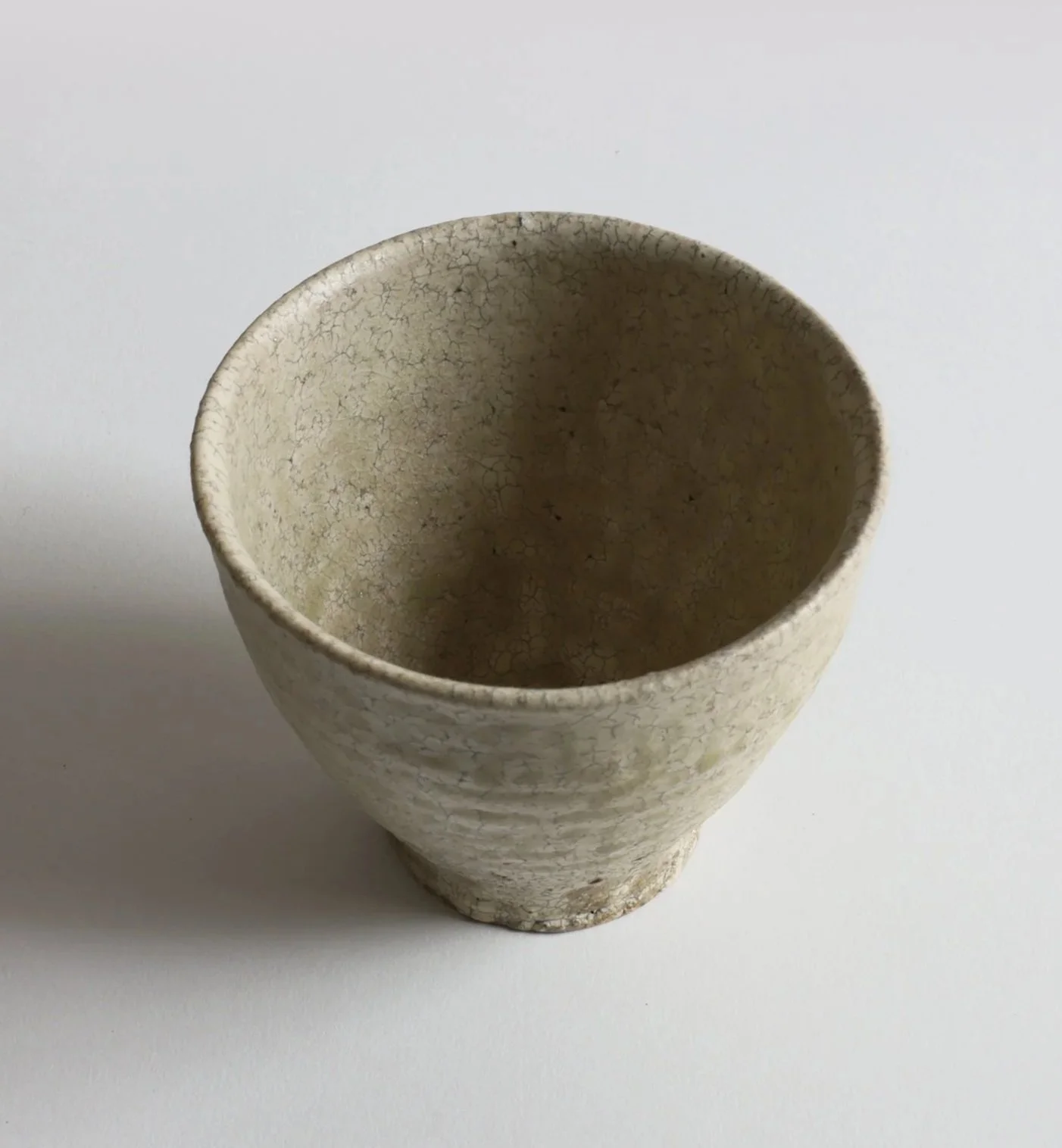
Everyday cup by Atsushi Ogata
Yunomi are cups used for drinking tea, typically green tea served in informal settings. Unlike the wide tea bowls used in the tea ceremony, yunomi are taller and more cylindrical, designed to be held comfortably in one hand.
They are part of everyday life in Japan, often appearing at the breakfast table or offered to guests when they visit a home. Because they are used frequently, potters often approach yunomi as a place to explore surface texture, glazing, and subtle variations in form.
A yunomi may be modest and practical, yet it can also carry the distinct touch of the maker—slight asymmetry, a glaze that pools softly near the foot, or a rim shaped to meet the hand naturally.
Guinomi — Sake Cups for Slow Drinking
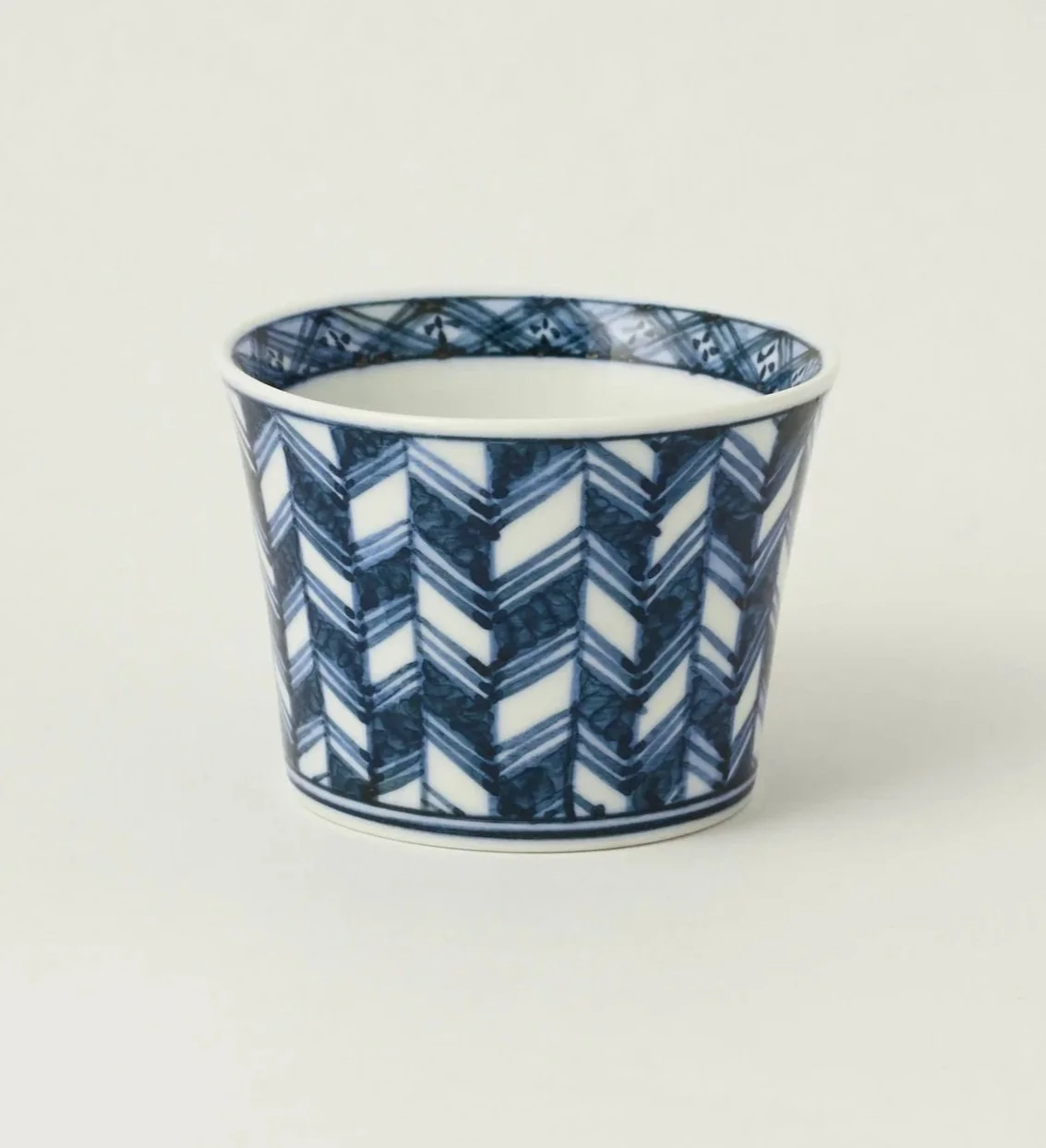
Guinomi by Tsukasa Momota
Guinomi are small cups used for drinking sake, but they are typically larger than ochoko and often more expressive in form.
The name comes from the word “guin”, an onomatopoeic expression suggesting the act of taking a satisfying sip. Guinomi are often favored by ceramic artists because they provide a compact canvas for experimentation with clay, glaze, and texture.
For collectors, guinomi have become a beloved category of Japanese studio ceramics. Their small scale allows artists to explore bold surfaces or unusual forms, while drinkers appreciate how each cup subtly shapes the experience of sake.
Ochoko — Formal Sake Cups
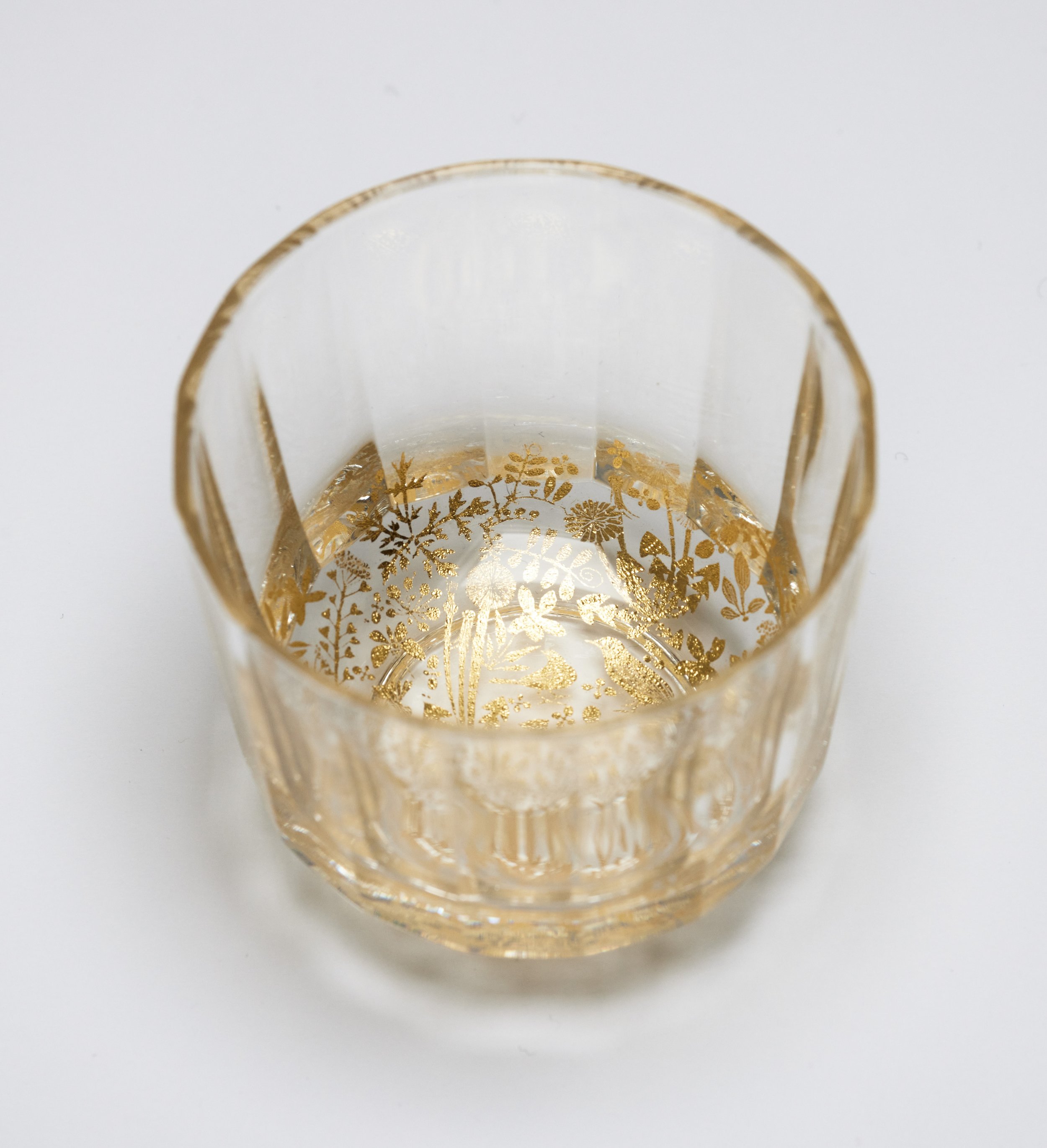
Sake glass by Sono Yura
Ochoko are another type of sake cup, usually smaller and more delicately proportioned than guinomi. They are often used when sake is poured from a flask (tokkuri) and shared among several people.
Because they hold only a small amount, ochoko encourage repeated pouring, reinforcing the social rhythm of drinking together. Their form is often more standardized than guinomi, though artisans have long created refined versions in porcelain, ceramics, and glass.
A Tradition of Small Vessels
The distinctions between yunomi, guinomi, and ochoko reflect the Japanese attention to everyday rituals. Each vessel is shaped not only by aesthetics but by how it will be held, poured, and shared.
For ceramic artists, these small forms offer a place to explore subtle variations in proportion, glaze, and texture. For collectors and drinkers alike, they become objects that quietly accompany daily moments—tea in the afternoon, or sake poured among friends.
Though modest in scale, these cups carry a long tradition of craftsmanship and the simple pleasure of using a well-made object.
At Japan Suite, we feature a selection of yunomi and guinomi created by contemporary Japanese ceramic artists, each reflecting the individual sensibility of its maker.
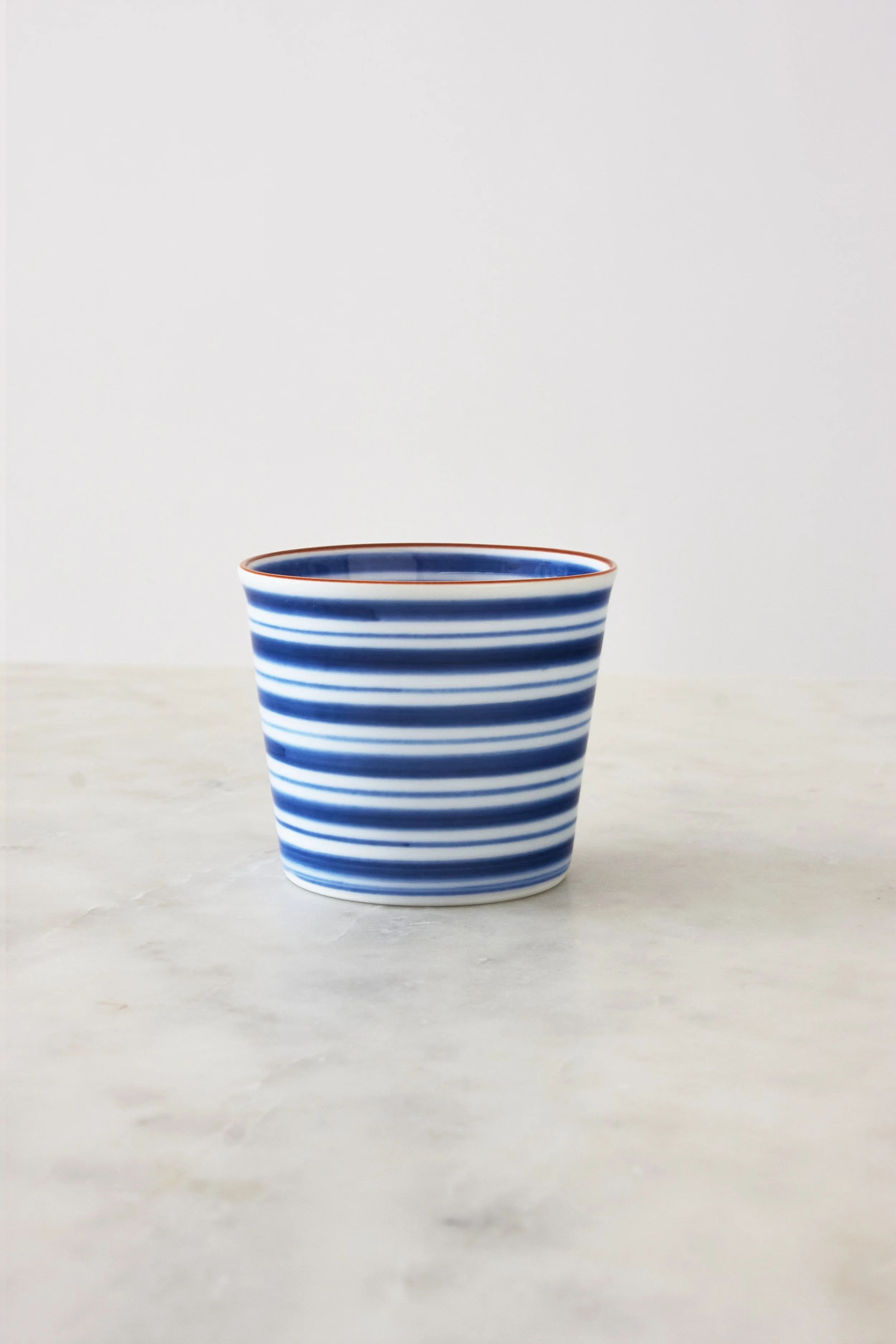
This exquisite guinomi by Tsukasa Momota is a perfect example of traditional Japanese craftsmanship with a contemporary twist. Carefully handcrafted using fine porcelain, it draws inspiration from nature, with delicate patterns reflecting elements of the natural world. Momota’s attention to detail and mastery of age-old techniques are evident in each piece, with every curve and design thoughtfully executed.
More than just a functional sake cup, this guinomi is a work of art that enhances your drinking experience. Its organic patterns inspired by nature speak to the harmony between tradition and modern design, making this piece a timeless addition to your collection.
Perfect for collectors or those looking to elevate their sake ritual, this guinomi celebrates Japan’s rich artistic heritage, reimagined for today’s world.
approx. 65mm x 58mm (2.56” x 2.28”)
TM09
Note: These are all made by hand, so each one may differ slightly from the photo and listed measurements.

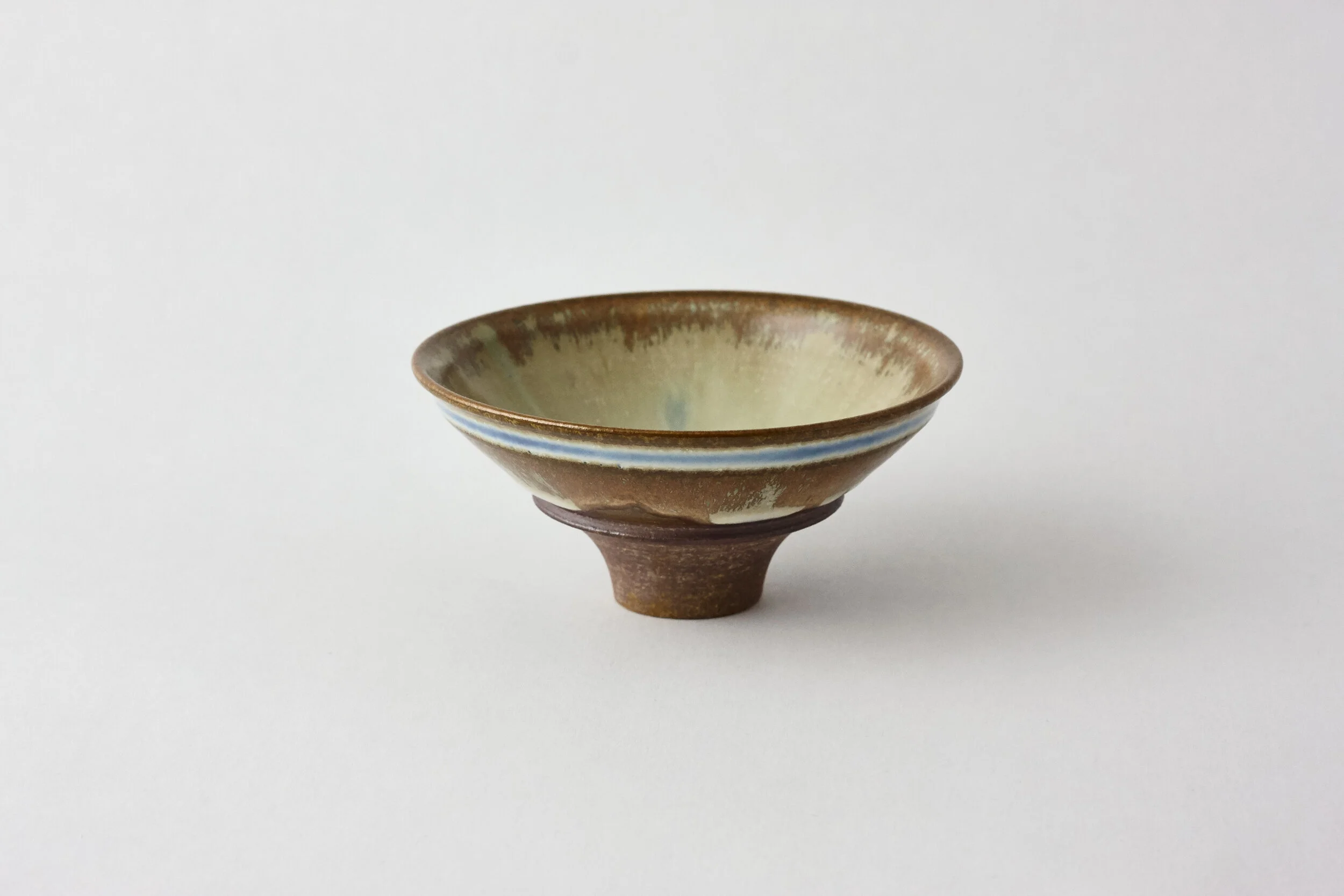
Artist’s new creation is a journey into the interplay between chemical reactions and art, a process she continues to explore and refine. Each piece is incredibly unique, like a snowflake — no two are ever exactly the same. There is magic in that the outcome is not entirely predictable. In a way, each is its own universe, with beautiful and delicate textural nuances.
Approx. 90mm W x 40mm H (3.54” W x 1.57” H)
MN02

The Horiguchi Kiriko Hane is a striking expression of Edo Kiriko craftsmanship, designed by third-generation master Toru Horiguchi. This bold black-and-white glass departs from traditional Kiriko styles while still embracing authentic Edo Kiriko motifs. With its intricate hand-cut patterns and a dynamic contrast of light and shadow, it embodies both heritage and innovation.
Substantial in weight, the Hane offers a refined, tactile experience that enhances the enjoyment of fine sake and spirits. The masterful cuts catch and reflect light beautifully, creating a mesmerizing interplay of textures. Each glass bears Toru Horiguchi’s signature and comes in an individually numbered wooden Kiribako box, emphasizing its exclusivity and collectible nature.
Approx. 65mm D x 55mm H (2.6" D x 2.2" H)
HK01
These are all made by hand, so each one may differ from the photo and listed measurements.

Horiguchi Kiriko and Shotoku Glass, two esteemed glassmakers with deep-rooted histories, have collaborated to create the Kai series—an expression of Edo Kiriko artistry blended with contemporary elegance.
Each glass is hand-blown by Shotoku Glass artisans, then meticulously cut by Horiguchi Kiriko craftsmen. The Kakudashi pattern features precisely carved facets, creating a striking interplay between polished brilliance and matte surfaces, an effect that enhances the depth and complexity of the design.
A refined yet functional piece, the Kai Kakudashi Glass is perfect for those who appreciate fine craftsmanship. Collect all three designs to explore the beauty of Edo Kiriko’s varied expressions. It also makes a distinguished gift, presented in an elegant kiribako wooden box.
Approx. 78mm D x 78mm H (3.1" D x 3.1" H)
HK04
These are all made by hand, so each one may differ from the photo and listed measurements.
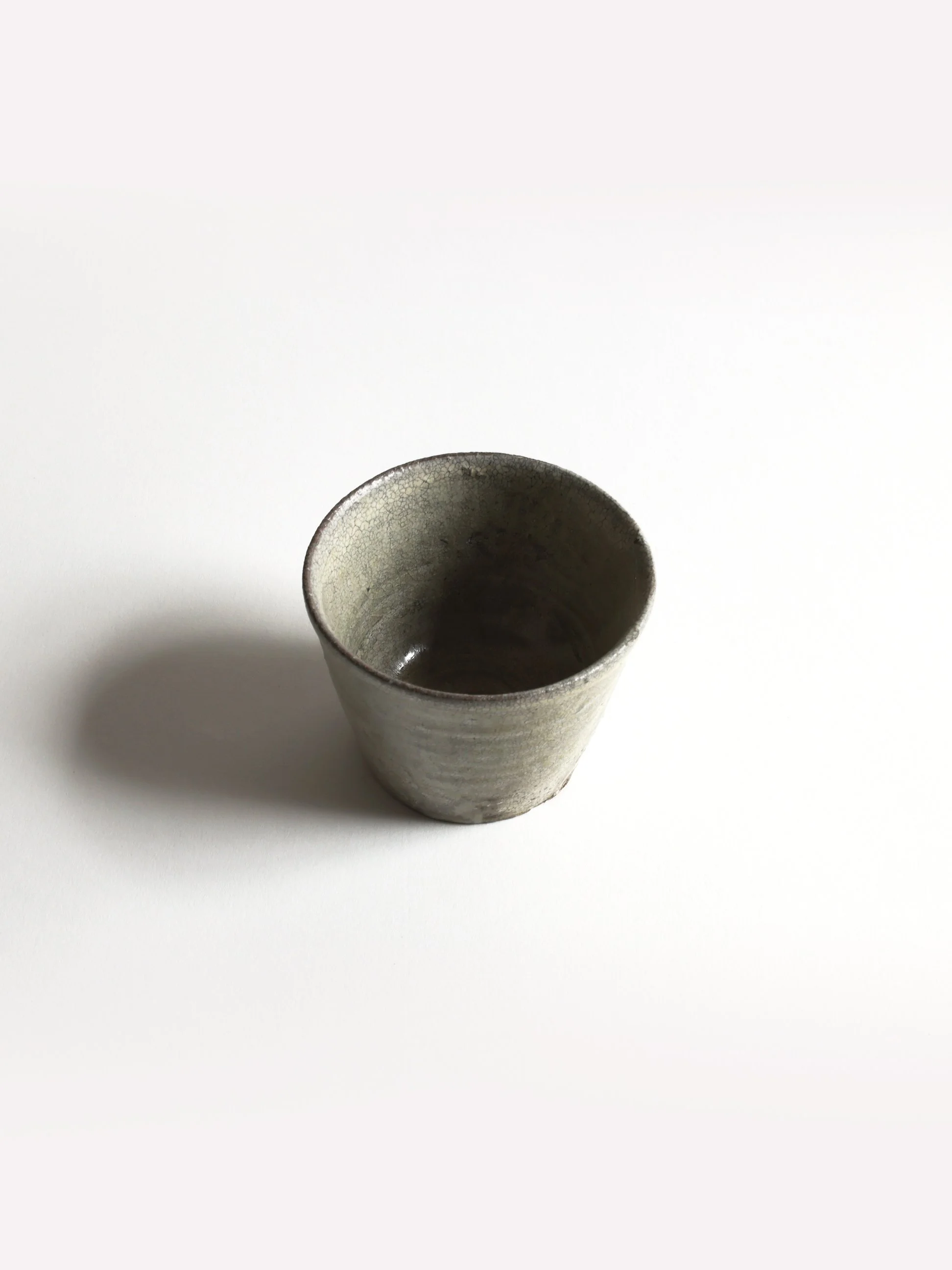
The Hibite Short Cup by Atsushi Ogata showcases the artist’s characteristic boldness and raw beauty. Crafted using the Hibi Kohiki technique, the cup features organic crackling and unique glaze variations that emerge naturally during the firing process. This short cup’s earthy texture and subtle, irregular form speak to Ogata’s instinctive approach to ceramics, capturing the unpredictability and power of nature.
Handmade in Japan, the Hibite Short Cup balances strength with simplicity, making it a distinctive yet functional piece. Its sturdy, tactile feel invites use, while the natural variations in the surface provide a sense of individuality. Each cup is a one-of-a-kind creation, reflecting the unpredictability and beauty of handmade ceramics.
Whether used in everyday moments or as part of a curated collection, the Hibite Short Cup stands as a testament to Ogata’s raw, expressive style and his ability to blend tradition with a bold, modern aesthetic.
Approx. 85mm D x 65mm H (3.25”D x 2.5”H)
AO14
Visit Product care page
*These are all made by hand, so each one may differ from the photo and listed measurements.